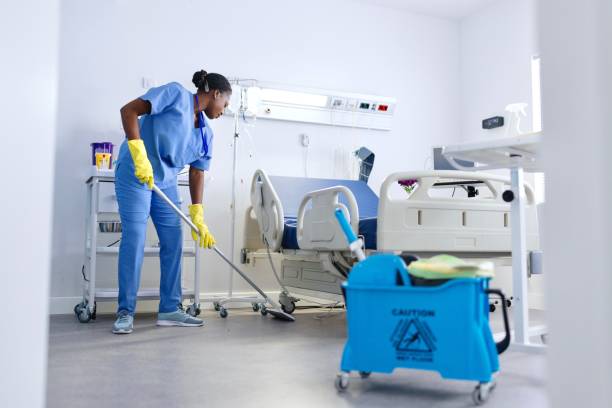
Patients walk into a medical centre expecting a level of cleanliness that goes well beyond what they’d notice in a retail store or office. It’s an unspoken assumption baked into the whole experience – waiting rooms should feel sterile, consult rooms should feel spotless, and nobody should have to think twice about touching a door handle on the way out. Meeting that expectation takes more than a mop and a bit of spray cleaner.
Clinical Settings Carry Real Risk
Medical centres see a constant flow of people who are, by definition, unwell. Some carry contagious illnesses, others have compromised immune systems that make them more vulnerable to picking something up while they’re there. Surfaces like examination tables, blood pressure cuffs, and reception counters are touched by dozens of people a day, and any lapse in cleaning protocol creates a genuine pathway for cross-infection.
This isn’t a theoretical concern. Healthcare-associated infections remain a recognised issue across clinical settings of all sizes, and general practice clinics are not exempt just because they’re smaller than a hospital.
Why Standard Commercial Cleaning Falls Short
A cleaner who does a great job in an office building isn’t automatically equipped to clean a clinical environment. Medical settings require an understanding of correct disinfectant contact times, how to handle sharps containers and clinical waste safely, and which areas count as high-touch versus low-risk zones. Get the disinfectant dwell time wrong, for instance, and a surface that looks clean may not actually be properly disinfected at all.
Clinics that want this done properly typically look for a medical centre cleaning Sydney provider with specific healthcare experience, rather than assuming any commercial cleaning company can adapt on the fly.
The Areas Patients Never Think About
Waiting rooms and consult rooms get the obvious attention, but a lot of infection risk sits in less visible places. Toy boxes in paediatric waiting areas, magazine racks, EFTPOS machines, and shared pens at reception are all touched constantly and cleaned rarely. Air conditioning vents and filters matter too – poor air quality can circulate airborne pathogens through a clinic far more effectively than most people realise.
Storage areas for consumables and linen also need proper hygiene management. Contamination in these spaces before items even reach a consult room defeats the purpose of cleaning the room itself.
Building a Protocol Around Risk, Not Just Routine
The most effective medical centre cleaning programs are built around a risk hierarchy rather than a flat, one-size-fits-all schedule. High-touch surfaces like door handles and light switches get cleaned multiple times a day. Consult rooms get a full clean and disinfect between certain patient types, particularly after anyone presenting with a suspected infectious illness. Lower-risk areas like staff offices can run on a less intensive schedule.
Documentation matters here too. Clinics undergoing accreditation reviews need clear records showing cleaning has actually happened as scheduled, not just an assumption that it did.
Staff Safety Is Part of the Equation
Reception and nursing staff spend entire shifts in these environments, and their exposure risk is real. A properly managed cleaning program reduces the chance of staff picking up illnesses from patients and helps limit outbreaks that could otherwise take out half a clinical team during a busy flu season, at exactly the time patient demand is highest.
Choosing a Cleaning Partner for a Clinical Setting
When evaluating providers, ask specifically about clinical waste handling, their approach to disinfectant selection and contact times, and whether their staff receive training on bloodborne pathogen protocols. It’s also worth asking how they handle after-hours access, since most clinics need cleaning done outside operating hours without disrupting the next day’s patient schedule.
References from other healthcare clients carry real weight here. A provider who already services GP clinics, allied health practices or specialist rooms will understand the nuances far faster than one starting from scratch.
Preparing for Accreditation and Spot Checks
Practices accredited under the RACGP or similar standards know that surprise spot checks and formal reviews can happen with little warning. Facilities that treat cleaning as a continuous, well-documented process rather than something ramped up right before an inspection tend to sail through these reviews with far less stress. Keeping simple records – who cleaned what, when, and with which products – turns an anxious scramble into a quick, confident walkthrough when an assessor arrives.
It also pays to involve clinical staff in flagging issues early, since nurses and doctors often notice small lapses – a bin that’s overflowing, a dispenser that’s empty – well before a formal audit would catch them. Building a simple feedback loop between clinical staff and the cleaning team closes that gap quickly.
Adapting to Multi-Practice Buildings
Many medical centres in Sydney now operate as multi-practice buildings, housing GPs, physiotherapists, dentists and allied health providers under one roof. Shared corridors, lifts and parking areas in these buildings need coordinated cleaning arrangements, since infection risk in a shared entrance affects every practice in the building, not just the one that happens to book the cleaning service. Practices sharing a building are often better served by aligning on a single provider for common areas, even if each practice separately manages its own consult rooms.
Final Word
Cleanliness in a medical centre isn’t just about presentation, though a spotless waiting room certainly helps put anxious patients at ease. It’s a core part of infection control, staff protection and the overall standard of care a clinic provides. Practices that treat their cleaning protocol with the same seriousness as any other clinical process tend to see fewer infection concerns and a patient base that trusts the environment they’re walking into.